
Gettysburg: A National Treasure
- Brad Gottfried, a Gettysburg Licensed Town Guide and Road Scholar online instructor, delves into the Battle of Gettysburg and some of the pivotal women in the conflict.
- Women served in roles on and off the battlefield, from acting as nurses to cooking for the soldiers to disguising themselves as men and fighting.
- Amongst these women were Mary Husband, who was known for her apron filled with various tools to serve soldiers, and Elizabeth Thorne, who buried over 100 soldiers in her caretaker husband’s absence.
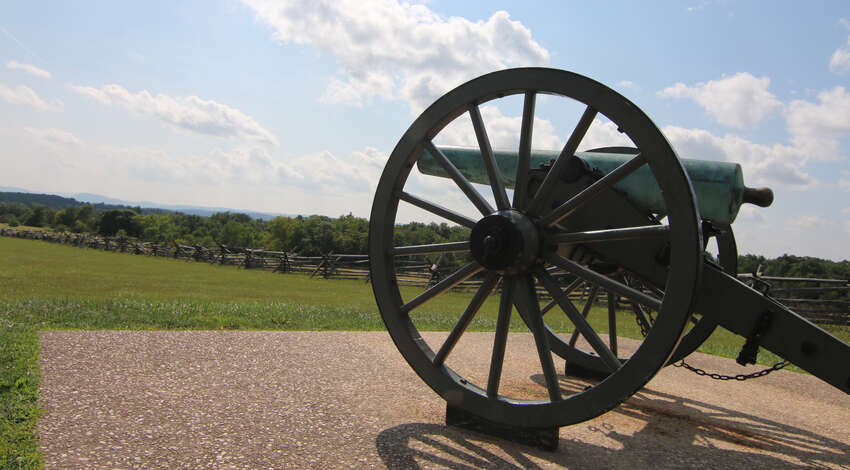
Living near Gettysburg and having written several books about the battle, I know why it occupies such an important place in American history. Walking the battlefield and streets of the town fills me with wonder. It is a special place.
Hundreds of thousands of tourists visit the area each year — most to see the battlefield. It is almost a pilgrimage — a rite of passage, if you will. Some folks come every year from far away.
Gettysburg was the largest battle in the Civil War, resulting in about 50,000 casualties. Extrapolated to today’s population, there would have been 1.3 million soldiers engaged and deaths would have reached near 100,000. Most importantly, it halted Robert E. Lee’s last great invasion of the North. Some call it the “turning point of the Civil War,” but not everyone agrees. It probably does not equate with the months after the Battle of Antietam when Lincoln enacted the Emancipation Proclamation, the capture of Vicksburg in 1863 that completely closed the Mississippi River to the South or the arrival of U. S. Grant as General-in-Chief of all Union armies in 1864.
Still, Gettysburg ranks as perhaps the greatest battle in the Civil War. For three days, two armies slugged it out. The first day was a Confederate victory. Day 2 saw an “almost” victory by Robert E. Lee, and the last day was an outright Union success. I think it was the drama of the three days that has captivated so many. From the heroic resistance of the Union cavalry under Gen. John Buford against overwhelming odds on Day 1, to Col. Joshua Chamberlain’s 20th Maine’s dramatic stand on Little Round Top to the pageantry of Pickett’s Charge on Day 3, it was a battle that carved its way into the American psyche.
The fighting was not restricted to the fields surrounding Gettysburg, as late afternoon of the first day’s battle saw thousands of Union troops desperately stampeding through the town, attempting to avoid the pursuing Confederates. Bitter fighting also erupted in the streets of the town.
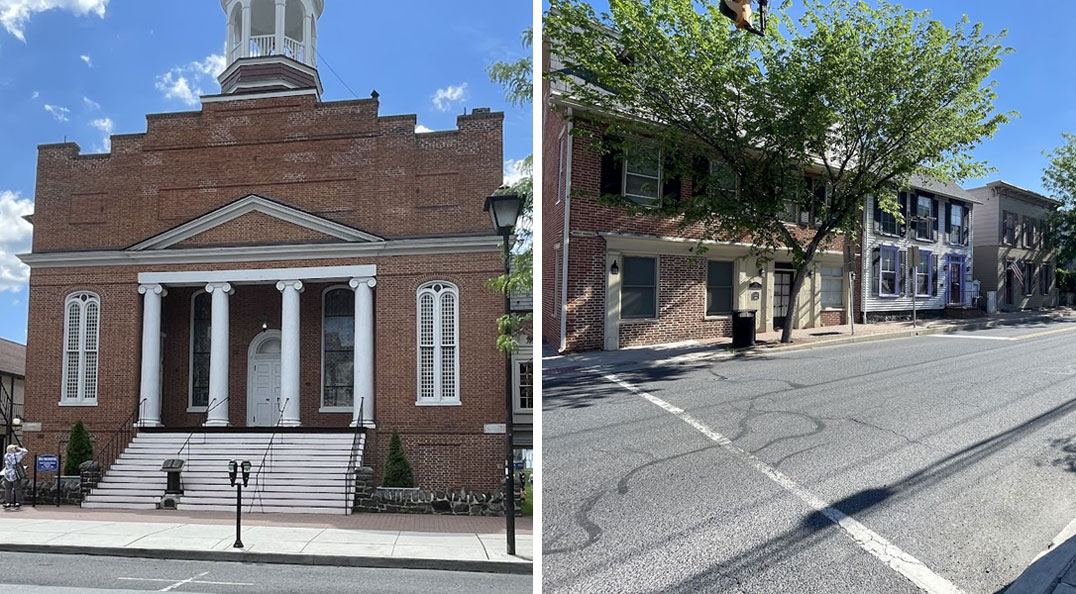
Christ Lutheran Church(left) and Gettysburg street(right).
The People of Gettysburg
As an online lecturer, I have devoted several programs to Gettysburg. During these lectures, I discuss how Gettysburg was a stop in the Underground Railroad and how dangerous it was to be a person of color living in the town during the Civil War years. Figures who played a major role in ending slavery lived here (Thaddeus Stevens) or visited here (Frederick Douglass).
Twenty-six presidents have visited Gettysburg. None, however, had the same impact as Abraham Lincoln, when he arrived on November 18, 1863, to help dedicate the National Cemetery. I spoke about Lincoln’s visit during one of my lectures — another involved Dwight D. Eisenhower, who moved here after leaving the military and became “regular folk” after he left the presidency.
Gettysburg has such a compelling history. As a Gettysburg Licensed Town Guide, I am particularly intrigued by the civilian experience before, during and after the battle. Many residents left before the battle began, but others stayed, inhabiting their cellars to avoid bullets flying around the town.
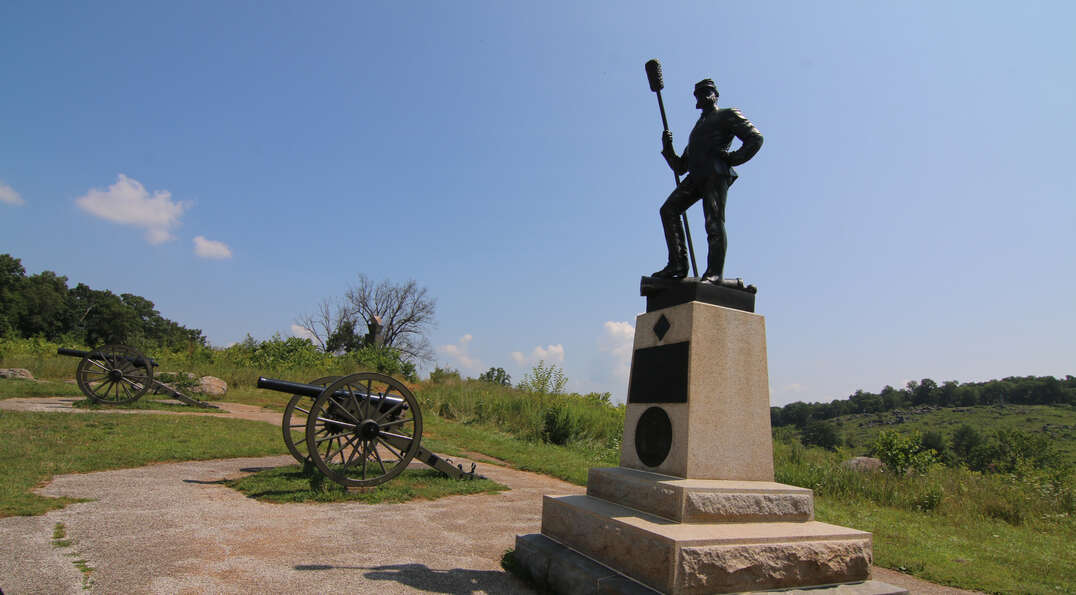
Gettysburg National Military Park monument.
The Women of Gettysburg
Many of the stories I tell as a town guide involve the women of Gettysburg. They rose to the occasion when wounded soldiers needed them most. Their story is one of courage, heroism and sacrifice. It is a story that needs to be told.
Many toiled in make-shift hospitals — churches, warehouses and in some cases, their own homes. These women became “nurses,” but not in the way we think of them today. The nurses of Gettysburg gave food and water to the men, received dictation from wounded soldiers, crafted letters home to their loved ones and even held their hands as they died.
Mary Husband was such a woman. She arrived after the battle was over and became known as the “lady with the apron.” According to one of the men: “[Mary] has a stout serviceable apron nearly covering her dress, and that apron is a miracle of pockets; pockets before, behind which will benefit or amuse her ‘boys’; an apple, an interesting book, a set of chess-men, checkers, dominos, or puzzles, newspapers, magazines, everything desired, comes out of those capacious pockets.”
I am inspired by the likes of Gettysburg residents Sallie Myers and Mary McAllister who ventured out to makeshift hospitals to help the wounded and then brought them into their own homes. Others, like Jennie Wade and Agnes Barr, did not wish to enter hospitals, but spent their waking hours cooking for the men. Then there was Elizabeth Thorne, whose husband was the caretaker of the local cemetery. Because he was away with the army, she was forced to bury more than 100 dead soldiers while she was six months pregnant.
Some women followed their husbands to Gettysburg, such as Elmina Spencer and Arabella Barlow, but most came because they cared deeply for the young men putting their lives on the line. These included Amanda Farnham, Annie Etheridge and even socialites, such as the Woolsey sisters and Ellen Orbison Harris. We can’t forget the 14 Sisters of Charity who ventured north from Emmitsburg, Maryland, to care for the wounded.
Some women disguised themselves as men and fought beside their brothers or husbands. We know little of them, but it is another way women helped the war effort.
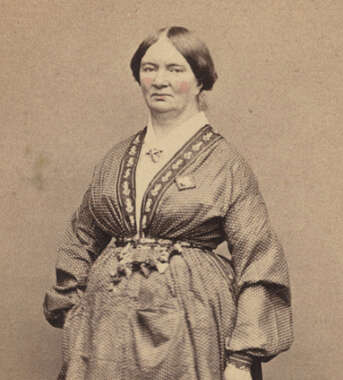
Mary Husband.
Some women disguised themselves as men and fought beside their brothers or husbands. We know little of them, but it is another way women helped the war effort.
I am personally inspired by the women of Gettysburg, and that is why I am giving an online lecture on Tuesday, June 9, 2026, at 1 p.m. (ET). I hope you will join me for this enlightening program honoring the women of Gettysburg.

Brad Gottfried earned his PhD and then spent 40 years in higher education, retiring as a college president. Upon retirement, he moved to Pennsylvania and became a Gettysburg Licensed Town Guide and an Antietam Certified Battlefield Guide. He is the author of 22 books on the Civil War, ranging from military studies to Lincoln’s visit to Gettysburg. Among his greatest joys are taking guests around Gettysburg and the Antietam battlefield.